Comparative Study of Chlorophyll A on Several Rice Genotypes for Food Resilience Against Drought Stress
Keywords:
Chlorophyll A, Inpago Genotypes, Rice Productivity, ResilientAbstract
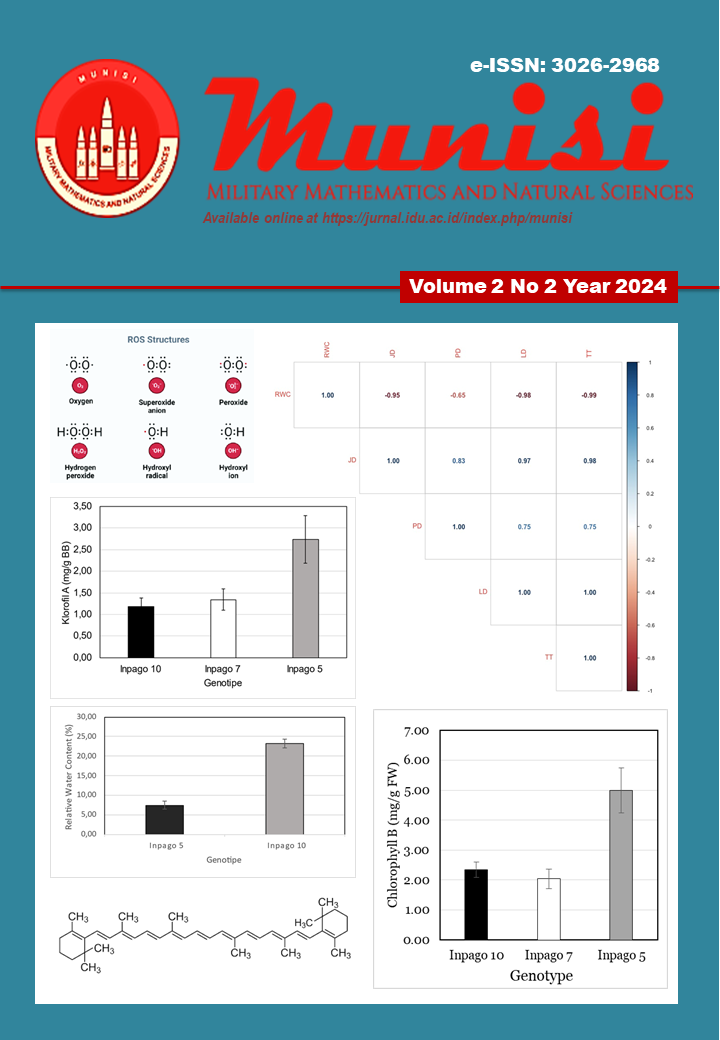
Drought stress is a major challenge in agriculture, especially in rainfed rice, which can reduce rice productivity and affect food security. This study analysed chlorophyll A levels in Inpago rice genotypes to evaluate their tolerance to drought stress. The genotypes tested included Inpago 1, Inpago 7 and Inpago 5. Chlorophyll A levels were measured using a spectrophotometer. The results showed variation in chlorophyll A levels, with Inpago 5 having the highest levels (2.73 mg/g), indicating better tolerance to drought stress. High chlorophyll A levels are associated with photosynthetic efficiency, so plants are better able to survive in dry conditions. This finding supports the importance of selecting resilient rice varieties for future food security. Genotypes with higher chlorophyll A levels, such as Inpago 5, should be prioritised in breeding programmes to improve the resilience of rice to climate change and water stress.
References
Gao. Y.. Liu. F.. & Zhang. J. (2020). "Drought stress and plant productivity." Agricultural Water Management. 227. 105834.
Taiz. L.. & Zeiger. E. (2010). Plant Physiology. Sinauer Associates.
Hussain. A.. Ali. H.. & Ghafoor. A. (2020). Correlation of chlorophyll content with drought tolerance in rice. Journal of Agricultural Science and Technology. 22(4). 883-895.
Nawaz. A.. Shah. A. A.. & Ullah. H. (2018). Physiological responses of rice genotypes to drought stress. Pakistan Journal of Botany. 50(1). 1-10.
Jamil. M.. Riaz. M.. & Ashraf. M. (2011). "Drought tolerance in plants: a review." African Journal of Agricultural Research. 6(25). 5787-5796.
Mishra. A.. Jha. A.. & Tripathi. D. (2019). Chlorophyll content as an indicator of drought tolerance in plants. Environmental and Experimental Botany. 158. 110-119.