CONSTRAINTS IN THE RECYCLED WASTEWATER UTILIZATION IN AN OFFICE BUILDING IN JAKARTA
DOI:
https://doi.org/10.32679/jsda.v20i1.879Abstract
Â
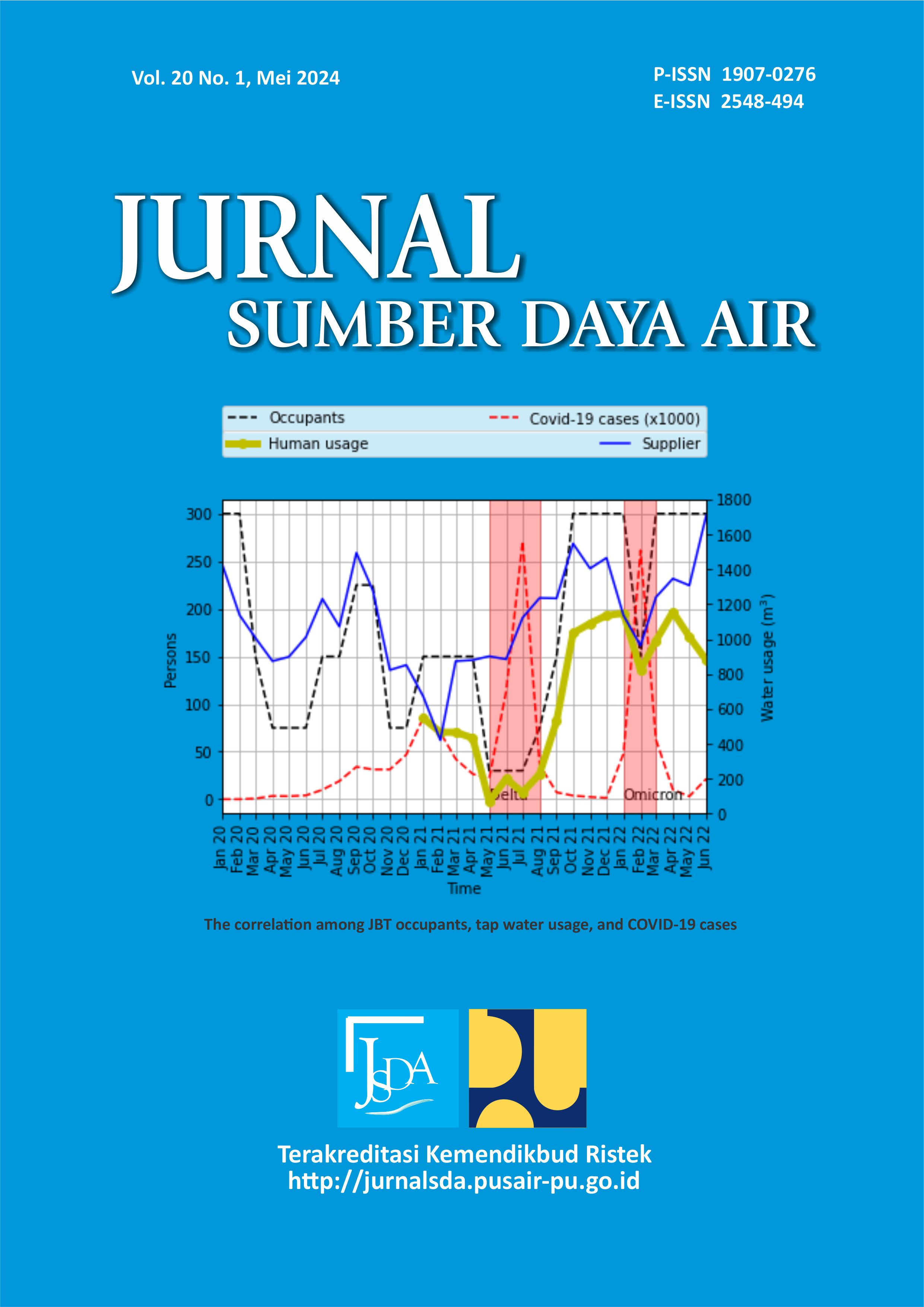
The threat of water scarcity and the progressing technology in sewage treatment plants promote the reuse of recycled wastewater. While the practice itself is beneficial, there are still issues to be solved to utilize its full potential. This study focuses on identifying the bottlenecks or limiting factors in implementing the practice on a building scale. An office building was researched to reveal its water usage pattern. The building introduces a sewage treatment plant so the sewage can be recycled into usable freshwater. The analysis indicates the produced recycled wastewater has not been fully utilized until now. While the volume of the water demand is greater than the recycled wastewater, several factors hinder the total utilization of the reclaimed water. The recycled wastewater is mostly more than enough to cover the water usage for both gardening and toilet flushing, the usages still leave an excess of water for other purposes. Because of the constraints in water quality, finance, and public reception, the excess reclaimed water is yet to be optimally utilized. Firstly, the quality of the reclaimed water is not very convincing to be used for non-flushing human usage and cooling towers. Secondly, the high cost of the investment and the overhaul of the plumbing system (for old buildings) deters the practice of reusing the reclaimed water. Thirdly, many people still have terrible perceptions about reused wastewater thus they would hesitate to utilize it even if the reused water is technically fine. Â
Keywords: recycled wastewater, sewage treatment plant, office building, water conservation, rainwater harvestingÂ
Downloads
Published
How to Cite
Issue
Section
Citation Check
License
Authors who publish in Jurnal Sumber Daya Air agree to the following terms:
- Authors retain copyright and grant the journal right of first publication with the work simultaneously licensed under a Attribution-ShareAlike 4.0 International (CC BY-SA 4.0) License that allows others to share the work with an acknowledgment of the work's authorship and initial publication in this journal.
- Authors are able to enter into separate, additional contractual arrangements for the non-exclusive distribution of the journal's published version of the work (e.g., post it to an institutional repository or publish it in a book), with an acknowledgment of its initial publication in this journal.
- Authors are permitted and encouraged to post their work online (e.g., in institutional repositories or on their website) prior to and during the submission process, as it can lead to productive exchanges, as well as earlier and greater citation of published work (See The Effect of Open Access).